
How to Check Criminal History in Kansas City
Begin with the event, not a broad name search. A report number, citation, location, arresting unit, or court heading can reveal which Kansas City office holds the first record. Kansas City Police Department keeps its incident and arrest reports. Kansas City Municipal Court handles Kansas City ordinance cases. State charges from Platte-side Kansas City belong in the Sixth Judicial Circuit, while custody data may appear at the accepting facility. The route changes when an event occurred in another county crossed by Kansas City.
Use a layered check when the goal is to trace one event or review your own record:
- Ask Kansas City Police Department for the incident or arrest report using the report number, date, location, and incident type when known.
- Check Kansas City Municipal Court for a Kansas City ordinance citation or municipal case.
- Search Missouri Case.net for a state criminal case, selecting Platte County when the incident arose on the Platte side.
- Look at the named booking facility, including Platte County JailTracker when county detention received the person.
- Use Missouri Automated Criminal History Site only when a statewide repository response is needed, then reconcile any possible match with the court disposition.
A name alone can lead to the wrong person or county. Match dates, locations, case numbers, and identifying details before linking records.
Kansas City Form 119 Records
The Kansas City Police Department Custodian of Records Form 119 is the direct request channel for a Platte-side Kansas City police record. It asks for the requester’s name, email, telephone, date of birth, address, and interest in the record. The Kansas City incident fields ask for the CRN or report number, date, time, location, incident type, and material sought. Those identifiers help the Criminal Records Section distinguish the right Kansas City event.
The Kansas City form also asks whether audio or video is sought. Fields cover current litigation, a municipal case, a possible civil claim or defense, next-of-kin status, and whether the requester appears in mobile video. Those questions guide Kansas City access review. Kansas City Police Department quotes fulfillment costs rather than one flat charge. The form must be certified, signed, and dated.
Note: Describe the exact report, recording, or document needed instead of asking for every record connected to a broad name.
The Kansas City Police Department
Kansas City Police Department holds reports created by its officers, even for a Platte County event. The sheriff may have dispatch, jail, or custody data, but does not become custodian of the Kansas City narrative report. Direct requests to the creating agency. The Kansas City Criminal Records Section receives Form 119 at 1125 Locust Street, Kansas City, Missouri 64106, and lists 816-234-5100.
The official Kansas City Police Department homepage identifies Kansas City public service channels. The headquarters image below comes from that source.
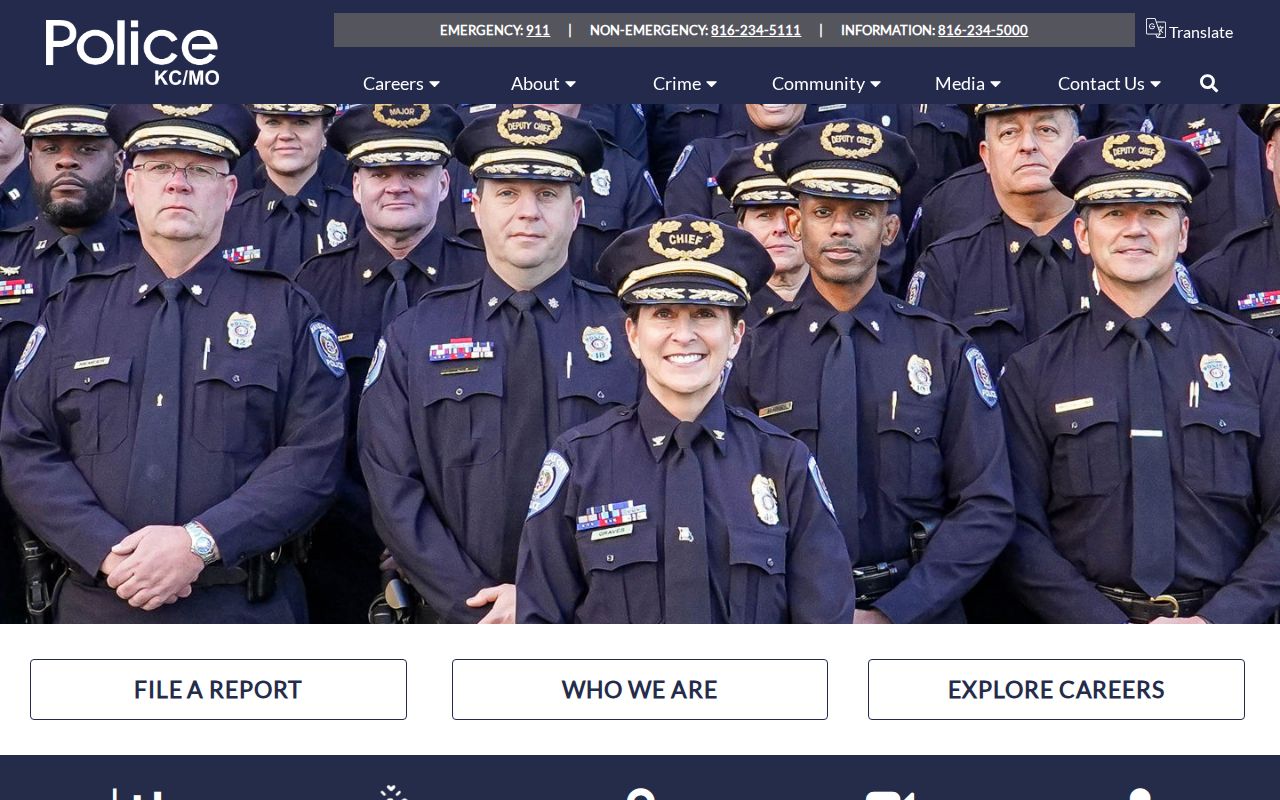
The building shows why a Kansas City police report remains a Kansas City record even when prosecution or detention data rests elsewhere.
Kansas City Criminal Records Section
Custodian of Records
1125 Locust Street
Kansas City, MO 64106
816-234-5100
Kansas City’s Four-County Records Split
Kansas City spans Platte, Clay, Jackson, and Cass counties. That footprint causes routing errors. A Kansas City population figure does not identify the incident county, and a Kansas City address does not prove Platte County courts hold the case. Use the Kansas City incident location, citation heading, case number, and arresting agency to establish venue, the court territory with authority.
A Kansas City Police Department report stays at the Kansas City records office while a state case moves to the proper county circuit court. Kansas City Municipal Court handles Kansas City ordinance matters. For a Platte-side state charge, search Missouri Case.net under Platte County and the Sixth Judicial Circuit. Follow another county when the citation says so.
Myth: every Kansas City criminal record belongs in one Kansas City database. Fact: the police report, municipal case, state case, booking, and repository response have separate custodians.
Note: A Kansas City name cannot establish the county; match the incident address and court heading before choosing a records office.
Arrests and Bookings in Kansas City
A Kansas City Police Department arrest starts an agency record. A Kansas City booking begins only when a facility accepts the person. It can add a booking number, intake time, charges, bond or hold data, fingerprints, property, and release status. These are not guilt findings. Kansas City intake charges can change after prosecutor review.
For a Platte-side Kansas City arrest, check Platte County JailTracker when it is the named facility. Request the Kansas City arrest report from Kansas City Police Department, then watch Case.net for a state charge. The sheriff publishes no daily blotter; JailTracker is the recent-custody interface. The Platte County arrest history resource details custody fields.
Recent custody data can change fast. Save the date checked, and confirm bond or release details with the facility before relying on an older result.
Kansas City Booking Beyond Platte Jail
A missing Platte County JailTracker entry does not settle whether Kansas City Police Department made an arrest. Kansas City arrestees may enter Platte County detention or another authorized facility. A Kansas City detainee may be processing, released, transferred, or not yet online. Start with the facility named by Kansas City police or the court instead of treating one system as citywide.
If no facility is clear, call the records or custody contact shown on the police paperwork. Ask which facility accepted the person and whether a booking number exists. Search that facility next. Then check Case.net over the following days for a filed state case. The prosecutor’s filing can differ from the arrest charge, so compare the final charge and disposition with the first booking entry.
Note: A blank Platte County roster may point to a different facility, a release, processing delay, or no county booking at all.
Kansas City Municipal Court Records
The Kansas City Municipal Court service hub is the Kansas City source for ordinance cases. It provides Kansas City court information and services. It does not replace a Platte County Circuit Court file for a state charge. Read the court name on the Kansas City citation before choosing a portal.
The two routes often answer different questions. Municipal Court shows what happened to a Kansas City ordinance case. Case.net and the Circuit Clerk show a state prosecution filed in the Sixth Judicial Circuit. When both appear linked to one event, use case numbers and dates to keep the files distinct.
| Court Name | Kansas City Municipal Court |
|---|---|
| Case Types Heard | Kansas City ordinance cases and related municipal matters |
| Case Lookup Channel | Official Municipal Court service hub and court clerk services |
| What the Docket Shows | City ordinance case information the court makes available through its official services |
| Copies & Fees | Request through the court and confirm current copy format and cost before ordering |
Note: A Kansas City ordinance file and a Platte County state case can share a date without being the same court record.
Kansas City Municipal or Sixth Circuit Records
The offense source controls the court path. A Kansas City ordinance allegation belongs in Kansas City Municipal Court. A state charge from Platte-side Kansas City belongs in Platte County Circuit Court. The file can show charges, docket events, hearings, pleas, motions, judgment, and sentence. It records what followed prosecutor filing.
Use the Kansas City citation or case header. If it names Kansas City Municipal Court, stay with that channel. If Case.net lists Platte County, that file controls the state case. A Kansas City Police Department report may support either route, but is not the judgment. The Platte County criminal court case records page explains those stages.
Where Kansas City Records End Up
A reportable Kansas City arrest can generate Kansas City, county, and state records at different times. Kansas City Police Department creates the report. A facility makes the booking. The prosecutor chooses charges. The Circuit Clerk opens a state case, while qualifying Kansas City fingerprints and updates reach the Missouri State Highway Patrol Central Repository.
Record flow: Kansas City Police Department › Platte County Courts › Missouri State Highway Patrol Central Repository
The Kansas City line is a sequence, not a promise of instant matches. Case.net tells the judicial story. A roster tells the custody story. MACHS compiles reportable events as possible name matches. Check the originating Kansas City record for recent activity. For a resolved Kansas City case, rely on the court disposition and a certified copy.
Following a Kansas City Arrest Into Case.net
Time changes Kansas City record visibility. Soon after arrest, Kansas City Police Department and the booking facility may have the clearest entries. A state case appears after filing. Search Case.net by litigant name, narrow to Platte County, and use year of birth or middle name to separate common names. A Kansas City case number is the cleanest key.
Open the case header, parties, charge lines, docket entries, scheduled hearings, judgment, and public documents. Compare the filed charge with the intake allegation. Continue to the final disposition, which states the judicial outcome. A missing result can stem from the wrong county, spelling, case type, an early search, older coverage, or a record closed by law. The Circuit Clerk is the fallback for older, archived, certified, or otherwise unavailable public files.
Case timeline: Arrest › Prosecutor review › Charge filed › Arraignment › Plea or trial › Disposition › Sentence.
Reading Kansas City Criminal Record Counts
Official Kansas City crime totals need an agency, year, and measure. The FBI Crime Data Explorer and Missouri data provide Kansas City Police Department figures, but Kansas City counts are not Platte-only activity. Kansas City’s four-county geography blocks that shortcut without geographic filtering.
Check whether a table reports incidents, arrests, or offenses known to police. State the reporting year and note incomplete agency submissions when the source flags them. Do not turn raw counts into a claim about one neighborhood or one person. Crime statistics describe reported activity at an agency or geographic level; they do not reveal the contents or outcome of a specific Kansas City criminal case.
Note: Use agency totals only for context, and never treat them as proof of what occurred in one person’s case.
Public Access Rules
Missouri law favors access but closes specific material. Kansas City Police Department may review investigative material, protected details, juvenile data, and recordings before release. Kansas City court access also follows judicial rules. Sealed cases and confidential files do not become public because a portal displays other Kansas City cases.
Kansas City Form 119 estimates four to six weeks and warns that recordings can add more than three weeks. That is not a release promise. Narrow the Kansas City request, include strong incident identifiers, and await the custodian’s cost and access decision.
Key Statutes:
Missouri Sunshine Law, RSMo §610.023 requires a public body to appoint a records custodian and respond by the end of the third business day, or explain why more time is needed.
RSMo §610.100 governs access to and closure of arrest, incident, and investigative records.
RSMo §43.506 defines the offense categories reported to Missouri’s Central Repository.